ChatGPT Image Dec 29, 2025, 10_29_16 PM

Ecommerce Growth Lessons from 2025: What Worked, What Failed & What’s Next in 2026

As 2025 comes to a close, one thing is clear: ecommerce didn’t slow down — it evolved.
Rising ad costs, smarter consumers, AI-driven platforms, and increasing competition forced brands to rethink how they grow, sell, and scale.

At World Source Outsourcing (WSO), we worked closely with ecommerce brands — especially Shopify and Walmart sellers serving the US market — and saw firsthand what actually delivered results and what quietly drained budgets.

This blog breaks down the biggest ecommerce growth lessons from 2025, what worked, what failed, and how brands should prepare for 2026.


What Worked in Ecommerce Growth in 2025

1. Conversion Optimization Over More Traffic

In 2025, successful brands stopped chasing traffic and focused on making existing traffic convert better.

Winning strategies included:

  • Faster page load speeds

  • Mobile-first store layouts

  • Simplified checkout processes

  • Strong product descriptions with benefit-driven copy

  • Trust signals (reviews, UGC, guarantees)

Brands that optimized conversions saw higher ROI without increasing ad spend.


2. Multi-Channel Selling (Shopify + Walmart + Social)

Relying on a single sales channel proved risky.

Brands that expanded to Walmart Marketplace, Instagram Shops, Facebook Shops, and TikTok traffic experienced:

  • More stable revenue

  • Reduced dependency on paid ads

  • Higher brand visibility

Walmart, in particular, became a major growth channel for US-focused sellers due to lower competition compared to Amazon.


3. Strategic Outsourcing Instead of Hiring In-House

Hiring full-time teams became expensive and inefficient.

In 2025, smart brands:

  • Outsourced store management

  • Delegated ad operations and creative tasks

  • Used offshore teams for customer support and backend operations

Outsourcing allowed brands to scale faster, stay lean, and focus on strategy, rather than daily execution.


4. AI as a Support Tool — Not a Replacement

AI played a major role in ecommerce, but the brands that won used AI correctly.

AI helped with:

  • Product research

  • Content drafting

  • Ad copy testing

  • Customer service automation

However, human oversight remained critical for brand voice, creative direction, and strategy.


5. Data-Driven Decisions Beat Gut Feelings

Top-performing stores relied heavily on:

  • Analytics dashboards

  • A/B testing

  • Heatmaps

  • Customer behavior tracking

Decisions backed by data consistently outperformed assumptions and trends.


What Failed Ecommerce Brands in 2025

1. Heavy Dependence on Paid Ads Alone

Brands relying only on Facebook or Google Ads struggled due to:

  • Rising CPCs

  • Frequent algorithm changes

  • Ad fatigue

Without organic content, email marketing, or marketplace traffic, growth became unsustainable.


2. Ignoring Customer Experience

Many stores focused on acquisition while ignoring:

  • Slow support response times

  • Poor post-purchase communication

  • Complicated return policies

In 2025, customer experience directly impacted repeat sales and reviews.


3. Trying to Do Everything In-House

Founders wearing too many hats led to:

  • Burnout

  • Inconsistent execution

  • Missed growth opportunities

Brands that refused to delegate stayed stuck.


4. Blindly Chasing Trends

Jumping into every new platform, AI tool, or ad format without a strategy resulted in wasted time and money.

Growth came from focus, not hype.


What Ecommerce Brands Must Prepare for in 2026

1. Stronger Brand Identity

In 2026, brands will outperform generic stores.

Invest in:

  • Clear messaging

  • Consistent visual identity

  • Authentic storytelling

  • Community building


2. More Emphasis on Retention

Email, SMS, loyalty programs, and post-purchase flows will drive more revenue than ever.

Keeping customers will be cheaper — and smarter — than constantly acquiring new ones.


3. Smarter Outsourcing Partnerships

Brands will move from hiring freelancers to building long-term outsourcing partnerships that handle:

  • Shopify management

  • Walmart store growth

  • Creative production

  • Marketing operations

This shift will reduce costs and increase consistency.


4. AI + Human Strategy = Competitive Advantage

The future belongs to brands that combine:

  • AI speed and automation

  • Human creativity and strategy

This balance will separate leaders from average sellers.


Final Thoughts: The Biggest Lesson from 2025

Growth in ecommerce is no longer about working harder — it’s about working smarter.

Brands that focused on:

  • Optimization over volume

  • Systems over chaos

  • Partnerships over solo efforts

…came out stronger in 2025 and are best positioned for 2026.


Ready to Scale Your Ecommerce Brand in 2026?

At World Source Outsourcing (WSO), we help ecommerce brands:

  • Grow Shopify & Walmart stores

  • Reduce operational costs

  • Scale with dedicated outsourcing teams

  • Focus on strategy while we handle execution

Let’s build a smarter, stronger ecommerce business in 2026 — together.

📩 Contact WSO today to start your growth journey.
Gemini_Generated_Image_66cjx866cjx866cj

Beyond the Search Bar: Why 2026 Belongs to “Conversational Commerce” Date: January 15, 2026

Remember the magnifying glass icon?

It seems almost quaint now, doesn’t it? For twenty-five years, that little icon was the gatekeeper of the internet. If you wanted to buy something, you had to translate your complex human desires into a string of robotic keywords.

You didn’t want “mens waterproof hiking boots size 11 wide.” You wanted “boots that won’t hurt my feet on the rainy trail up to Machu Picchu next month.” But the search bar couldn’t understand that.

Welcome to 2026. The translation layer is gone.

The defining e-commerce shift of our current moment isn’t AR, VR, or crypto payments. It’s the death of the traditional search bar and the rise of Conversational Commerce as the primary interface for shopping.

We are no longer “searching” for products. We are “asking” for solutions, and the brands that haven’t optimized for these conversations are rapidly becoming invisible.

Here is why the search bar is dying, and how to ensure your brand survives in the age of the AI agent.


1. The Fatigue of “Ten Blue Links”

By 2024, search fatigue had set in. A simple product query yielded a page cluttered with sponsored ads, SEO-gamed listicles, and irrelevant TikTok videos. Finding a simple product required mental gymnastics: opening fifteen tabs, comparing specs in spreadsheets, and reading dubious reviews.

The friction was immense.

In 2026, generative AI agents (like advanced versions of Gemini, ChatGPT, and Claude integrated into mobile OS) have collapsed that entire funnel.

The customer doesn’t want a list of options; they want an answer. They want the AI to do the “tab-opening” work for them. If your customer asks their AI assistant for “the best ergonomic office chair for lower back pain under $500,” and your product is the answer, you win the sale without them ever visiting Google’s homepage.

2. Meet Your New Customer: The AI Agent

This is the hardest pivot for traditional marketers to grasp: Your first point of contact is often no longer a human.

Before a human shopper lands on your Shopify or Magento storefront, their personal AI agent has likely already crawled your site, analyzed your return policies, compared your specs against competitors, and read synthesized reviews.

If your e-commerce site is built only for human eyeballs—pretty pictures and catchy headlines—you are failing. You must now build for machine comprehension.

If an AI agent asks your website, “Does this skincare product contain allergens suitable for someone with eczema?”, your site needs to be able to answer “Yes” or “No” immediately and definitively via structured data. If the agent has to “guess” based on vague product descriptions, it will move on to a competitor it understands better.

3. The Shift from SEO to GEO (Generative Engine Optimization)

Traditional SEO was about guessing what keywords humans typed into a box. GEO (Generative Engine Optimization) is about teaching an AI who you are, what you sell, and why you are the authority.

The battleground for 2026 isn’t ranking #1 on a SERP; it’s about being the single source of truth cited by an AI.

How do you win at GEO?

  • Hyper-Structured Data: Schema markup is no longer optional; it is the lifeblood of your catalog. Every SKU needs granular detail tagged in a way machines understand—materials, origin, dimensions, compatibility, and use cases.

  • Semantic Richness over Keyword Density: Stop writing “best running shoes 2026.” Start creating content that answers complex, long-tail questions. Build a Knowledge Graph that connects your products to real-world problems.

  • Radical Transparency: AI agents prioritize trustworthiness. If your shipping times are vague or your sustainability claims unverifiable, the agent will deprioritize you. Clearly stated policies are now a marketing asset.

4. What a Transaction Looks Like in 2026

Let’s contrast a 2022 transaction with a 2026 conversational transaction.

The Old Way (2022):

  • User types: “Best coffee maker for small apartment”

  • User receives: 10 links to affiliate blogs (“Top 15 Coffee Makers!”).

  • Process: User clicks four links, gets overwhelmed by pop-ups, abandons cart, forgets about it for three days.

The New Way (2026):

  • User speaks to phone: “Hey, my Keurig broke. Find me something better that fits on my tiny counter, doesn’t use plastic pods, and makes good espresso. Keep it under $300.”

  • The AI Agent: Instantly cross-references dimensions, reviews mentioning “counter space,” filters out pod machines, and checks price points across the web.

  • AI Response (Seconds later): “I found the ‘Breville Bambino Plus.’ It fits your counter perfectly, uses real grounds, and is currently rated highly for espresso quality. It’s $299 at Williams Sonoma and can be delivered by tomorrow afternoon. Shall I order it using your saved card?”

  • User: “Yeah, go ahead.”

One interaction. Zero clicks. Sale complete.

If you were the brand selling that Breville, you won that sale not because of a flashy banner ad, but because your data was structured enough for the AI to confidently recommend you.

The Hard Truth

The search bar isn’t coming back. The brands clinging to keyword-stuffing strategies are fighting the last war.

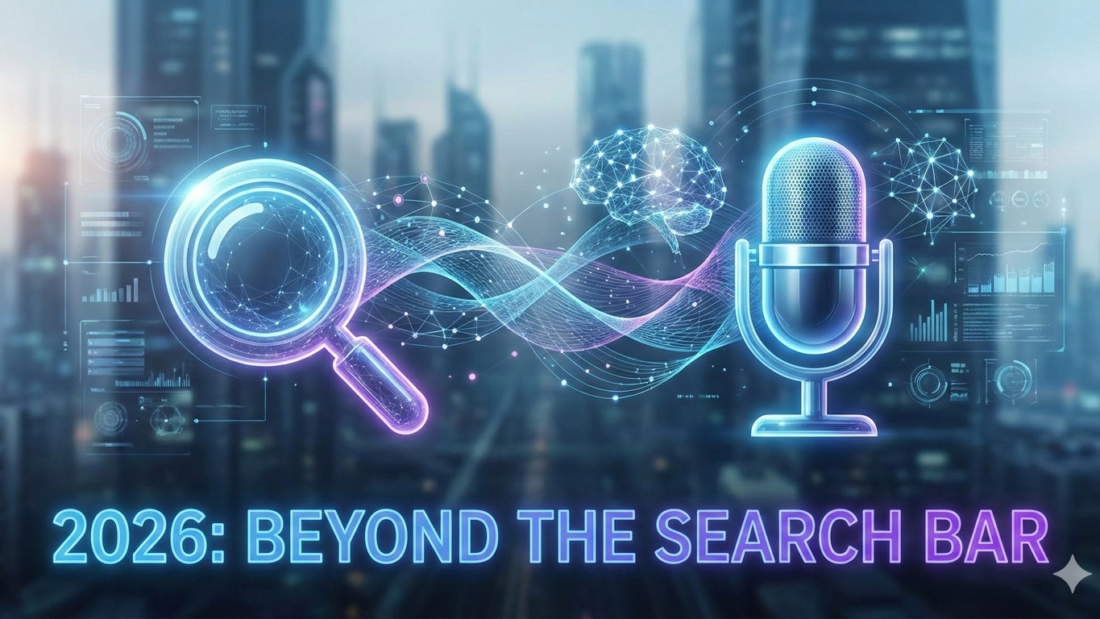
The future of e-commerce belongs to those who can hold a conversation—not just with their customers, but with the intelligent agents that now represent them. It’s time to stop optimizing for the magnifying glass and start optimizing for the microphone.

ChatGPT Image Dec 15, 2025, 09_17_26 PM

Last-Minute Holiday Optimization: How to Maximize Ecommerce Sales Before Year-End

Think it’s too late to boost ecommerce sales before the year ends?
Think again.

The final days of the holiday season are packed with high-intent buyers, gift-card shoppers, and last-minute deal hunters. With a few smart optimizations, ecommerce brands can still capture significant revenue before December 31.

Here’s how to make the most of the final holiday rush — even at the last minute.


1. Shift Messaging to “Last Chance” & “Year-End Deals”

At this stage, urgency beats everything.

Update your website and ads with:

  • “Last Chance Before Year-End”

  • “Final Holiday Deals”

  • “Ending Tonight / Ending Dec 31”

  • “Don’t Miss Out”

Urgency-driven messaging pushes hesitant shoppers to act fast.


2. Promote Digital Products, Gift Cards & Instant Delivery

Shipping cutoffs are approaching — but sales don’t have to stop.

Highlight:

  • Digital downloads

  • Gift cards

  • Instant email delivery

  • Same-day fulfillment (if available)

These remove shipping anxiety and unlock extra sales.


3. Optimize Your Homepage & Hero Section

Your homepage is the first stop for last-minute shoppers.

Make sure it clearly shows:

  • Your best year-end offer

  • Countdown timers

  • Shipping cutoffs or instant delivery

  • Clear CTA buttons

If visitors don’t understand your offer in 5 seconds, you lose them.


4. Retarget Warm Audiences Aggressively

Most buyers won’t convert on their first visit — especially during the holidays.

Focus on:

  • Website visitors

  • Cart abandoners

  • Video viewers

  • Email & SMS subscribers

Retargeting ads are cheaper and convert better than cold traffic at this stage.


5. Simplify Checkout & Reduce Friction

Small checkout issues cost big money during peak traffic.

Quick fixes:

  • Remove unnecessary form fields

  • Enable express checkout (Shop Pay, Apple Pay, Google Pay)

  • Clearly show return & refund policy

  • Add trust badges

Less friction = more completed purchases.


6. Push Email & SMS “Final Reminder” Campaigns

Email and SMS are your highest ROI channels right now.

Send:

  • “Last chance” emails

  • Year-end flash sale reminders

  • Cart abandonment follow-ups

  • VIP exclusive offers

Even a single email blast can generate thousands in revenue.


7. Create a Simple Year-End Bundle or Offer

You don’t need complex promotions.

Easy ideas:

  • Buy 2, Get 10% Off

  • Year-End Bundle Deal

  • Free bonus on orders above X amount

  • Free shipping for the final days

Bundles increase AOV and help clear inventory before year-end.


8. Update Shipping & Delivery Messaging Clearly

Confusion kills conversions.

Be transparent about:

  • Delivery timelines

  • Shipping cutoffs

  • Digital delivery options

  • Post-holiday shipping expectations

Clear messaging builds trust and reduces abandoned carts.


9. Highlight Social Proof & Best Sellers

Last-minute buyers want reassurance.

Feature:

  • “Best Seller” tags

  • Customer reviews

  • UGC images or videos

  • Testimonials on product pages

Social proof speeds up buying decisions.


10. Prepare for Post-Holiday Retention

The sale doesn’t end on December 31.

Capture value by:

  • Collecting emails/SMS

  • Offering post-purchase discounts

  • Promoting loyalty programs

  • Retargeting holiday buyers in January

Holiday shoppers can become long-term customers if nurtured correctly.


Final Thoughts

It’s not too late to win this holiday season.

With focused messaging, smart retargeting, and quick optimizations, ecommerce brands can still maximize revenue before year-end — without rebuilding everything from scratch.

If you need help executing these last-minute strategies, our team is ready to step in and make it happen.

Your growth. Our strategies. 🚀

ChatGPT Image Dec 8, 2025, 07_43_51 PM

Top 10 Proven Tactics to Boost Shopify Store Sales This Holiday Season

The holiday season is here — and with it comes the biggest sales opportunity of the entire year for ecommerce brands. Whether you’re gearing up for Black Friday, Cyber Monday, Christmas, or New Year promos, this is the moment when your Shopify store can scale faster than ever.

But with competition rising and customer expectations at an all-time high, success doesn’t happen by accident. You need a smart setup, optimized flows, and high-converting strategies to stand out.

Below are the 10 proven tactics that top-performing Shopify stores use every holiday season to maximize conversions, boost AOV, and squeeze the most revenue out of their traffic.


1. Speed Up Your Store — Every Second Counts

Holiday shoppers bounce fast.
A slow website can kill your conversions instantly.

Speed boosters:

  • Compress images (use WebP format)

  • Minimize unused Shopify apps

  • Use a fast, lightweight theme

  • Enable lazy loading

  • Use a CDN for media

A fast website doesn’t just convert better — it also reduces ad costs and boosts SEO.


2. Build High-Converting Holiday Landing Pages

Don’t send holiday traffic to your homepage.
Create a holiday-themed landing page with:

  • A strong hero banner

  • Clear discounts

  • Gift-based messaging

  • Bundles & upsells

  • Social proof

  • Sticky ATC button

  • Holiday countdown timer

These pages often convert 2–4× higher than regular pages.


3. Offer Bundles & Volume Discounts to Lift AOV

Holiday shoppers LOVE value.

Try:

  • Buy 2 Get 1 Free

  • Holiday Gift Bundles

  • “Perfect for Him/Her” gift sets

  • Volume discounts (Buy more, save more)

This increases your Average Order Value (AOV) and encourages shoppers to spend more without increasing your ad spend.


4. Add Scarcity & Urgency (The Right Way)

People buy faster when they feel they might miss out.

Use:

  • Countdown timers

  • Low-stock labels

  • “Order before Dec __ for Christmas delivery”

  • Limited-time flash deals

Ethical urgency works wonders, especially in Q4.


5. Set Up Holiday Email + SMS Automations

Holiday season = HIGH buying intent.
But shoppers get distracted easily.

Your automations should include:

  • Abandoned cart series

  • Checkout recovery

  • Welcome offer

  • VIP early access

  • Last-chance reminders

  • Holiday gift guides via email

These flows typically generate 20–40% extra revenue.


6. Optimize Product Pages for Holiday Conversions

A winning product page answers every question a shopper may have.

Add:

  • Holiday guarantee

  • Fast shipping information

  • Trust badges

  • UGC videos or photo reviews

  • Short benefit-based descriptions

  • Bold, mobile-friendly ATC buttons

Holiday-specific messaging boosts conversions significantly.


7. Use Holiday-Themed Creatives in Your Ads

To stand out in crowded feeds, your ads must look like holiday ads.

Use creatives that highlight:

  • Gift ideas

  • Bundles

  • Before/after transformations

  • Testimonials

  • Seasonal colors & motifs (red, green, gold)

Gift-focused messaging performs incredibly well on Meta & TikTok.


8. Raise AOV With Free Shipping Thresholds

A simple holiday cheat code:

“Free Shipping On Orders Above $60”

Customers will add extra items to reach the threshold.
It works every time.


9. Strengthen Customer Support Before Traffic Spikes

Support issues spike during holidays.
Fast support = fewer abandoned carts + happier customers.

Improve:

  • Response time

  • Live chat availability

  • Return/exchange clarity

  • Holiday shipping FAQs

  • Tracking automation

Excellent support dramatically increases trust — and conversions.


10. Retarget Warm Audiences Like Crazy

Most shoppers won’t buy the first time.

Set up retargeting on:

  • Meta (IG + FB)

  • TikTok

  • Google PMAX

  • Email

  • SMS

  • Website pop-ups

Retargeting is where holiday profits explode.


🎁 Final Takeaway

The holiday season is your biggest moment to scale — but winning requires more than traffic.
You need a fast store, irresistible offers, optimized pages, and smart automation running behind the scenes.

With these 10 proven tactics, your Shopify store (or your client’s store) will be ready to turn holiday traffic into holiday profit.