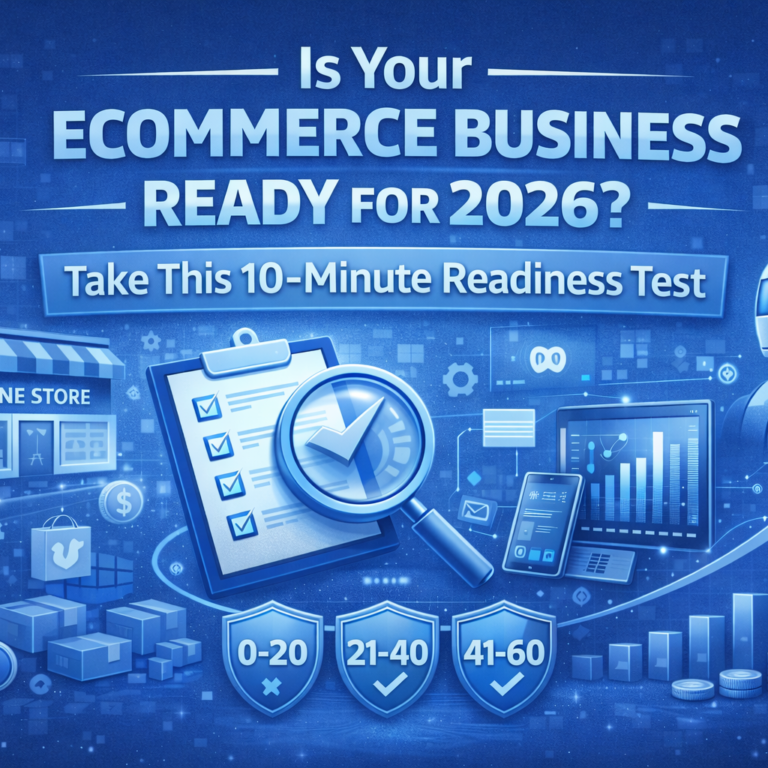
The ecommerce landscape is evolving faster than ever. What worked in 2024—or even early 2025—won’t be enough to compete in 2026. Rising ad costs, smarter consumers, AI-driven competitors, and tighter margins mean one thing: brands must operate smarter, leaner, and more strategically.
This playbook breaks down the key trends, tools, and tactics ecommerce brands must adopt in 2026 to scale sustainably and stay profitable.
1. The Big Shift: From “More Traffic” to “Better Operations”
In previous years, growth often meant pouring more money into ads. In 2026, growth is driven by operational efficiency and lifetime value, not just acquisition.
Winning brands are focusing on:
-
Systems instead of chaos
-
Retention instead of constant acquisition
-
Scalable teams instead of founder burnout
Growth is no longer about doing more—it’s about doing better.
2. Key Ecommerce Trends Shaping 2026
🔹 AI-Powered Everything (But With Human Control)
AI is now deeply embedded in ecommerce—from product descriptions and customer support to demand forecasting and ad optimization. However, the brands winning with AI are those using it as an assistant, not a replacement.
What works in 2026:
-
AI-assisted customer support with human escalation
-
AI content drafts reviewed by real operators
-
Predictive analytics for inventory and demand
🔹 Outsourcing Is No Longer Optional
As competition increases, brands are realizing that in-house teams are expensive and slow to scale. Outsourcing key operations allows founders to focus on growth, partnerships, and strategy.
Commonly outsourced functions in 2026:
-
Store management & backend operations
-
Customer support (email, chat, order management)
-
Product research & listing optimization
-
Marketplace management (Walmart, Amazon)
🔹 Omnichannel Is the New Baseline
Customers don’t see platforms—they see brands. In 2026, ecommerce success means having a connected presence across Shopify, marketplaces, social commerce, and email/SMS.
Brands that rely on a single channel are at the highest risk.
3. Must-Have Tools for Ecommerce Growth in 2026
Tools don’t create growth—but the right tools enable it.
🔧 Store & Conversion Tools
-
Page speed optimization tools
-
CRO & heatmap software
-
Subscription & upsell apps
📊 Operations & Analytics
-
Inventory forecasting tools
-
Unified dashboards (sales, ads, fulfillment)
-
SOP and workflow management systems
🤖 Automation & AI
-
AI chat assistants with rule-based logic
-
Automated order processing & refunds
-
Smart ad testing and creative rotation
The key is integration—tools must talk to each other, not create more complexity.
4. Tactics That Will Separate Winners from Losers
✅ Build Systems Before Scaling Ads
Many brands fail because they scale ads on broken foundations. In 2026, successful brands audit their store, operations, and support systems before increasing ad spend.
Ask yourself:
-
Can we handle 2x orders without delays?
-
Is customer support fast and consistent?
-
Are refunds, exchanges, and follow-ups automated?
✅ Turn Customer Support into a Profit Driver
Support is no longer just cost—it’s a growth channel.
Top brands use support to:
-
Recover abandoned checkouts
-
Increase repeat purchases
-
Reduce refunds and chargebacks
Fast, professional support directly impacts LTV and brand trust.
✅ Focus on Retention Over Acquisition
Acquiring new customers is expensive. Retaining existing ones is profitable.
Winning tactics include:
-
Post-purchase email & SMS flows
-
Loyalty programs
-
Proactive support and follow-ups
In 2026, brands that don’t prioritize retention will struggle with margins.
5. The Role of Lean Teams & Virtual Operations
The most profitable ecommerce brands in 2026 are not the biggest—they’re the most efficient.
Instead of large in-house teams, they use:
-
Small core leadership
-
Specialized outsourced teams
-
Clear SOPs and KPIs
This model allows brands to scale faster, reduce overhead, and stay flexible in changing markets.
6. What This Means for Ecommerce Founders in 2026
To grow in 2026, founders must shift from:
❌ Doing everything themselves
❌ Chasing every new tool or trend
❌ Scaling without systems
To:
✅ Delegating operations
✅ Building repeatable processes
✅ Focusing on strategy and growth
Final Thoughts: Growth in 2026 Is Built, Not Bought
Ecommerce growth in 2026 is no longer about hacks or shortcuts. It’s about strong foundations, smart tools, and scalable operations.
Brands that invest early in systems, outsourcing, and customer experience will not only survive—but lead.
If you’re planning to scale this year, the question isn’t whether you should adapt—
it’s how fast you can.
Ready to Build a Scalable Ecommerce Operation for 2026?
At WSO, we help ecommerce brands streamline operations, outsource smartly, and scale with confidence.
👉 Get your store and operations ready for 2026—before your competitors do.